If Your Blood Sugar Level is High, You Should Do This Fast
Standard Health Press@standard
Seen in
Tech & routing
- Redirect chain
- 3 hops
- Language
- English
Landing page
Operated by
Company info pending
Landing page
sugarhealthnotice.com
1 page · final host: sugarhealthnotice.com
Tech stack
No third-party monetization stack detected — this appears to be a direct landing page.
Auto-summary
At a glance
Taboola direct LP. Lead-gen / DTC. Running in 🇺🇸 United States. Active 16 days.
Landing page intelligence
portal.sugarhealthnotice.com
Host
portal.sugarhealthnotice.com
Path
/69e9869c8f7d94d0c2fd8a66
Full URL
https://portal.sugarhealthnotice.com/69e9869c8f7d94d0c2fd8a66
Redirect chain
3 hops- hop 1portal.sugarhealthnotice.com
- hop 2sugarhealthnotice.com
- finalsugarhealthnotice.com
Landing page snapshot

Captured 2026-05-14
Tracking parameters
No query string on this URL.
Tracking setup · Taboola
Taboola passes site, site_id, campaign_id, campaign_item_id and click-id by default. Map those to your tracker's source/sub1-4 fields. Use {click_id} as your unique click identifier when posting back conversions.
?site={site}&site_id={site_id}&campaign_id={campaign_id}&campaign_item_id={campaign_item_id}&click-id={click_id}Default Taboola setup template: ?site={site}&site_id={site_id}&campaign_id={campaign_id}&campaign_item_id={campaign_item_id}&click-id={click_id}
Landing page text
Show landing page text
Visible text extracted from the advertiser's landing page · last fetched 2026-05-12
▶
Landing page text
Show landing page text
Visible text extracted from the advertiser's landing page · last fetched 2026-05-12
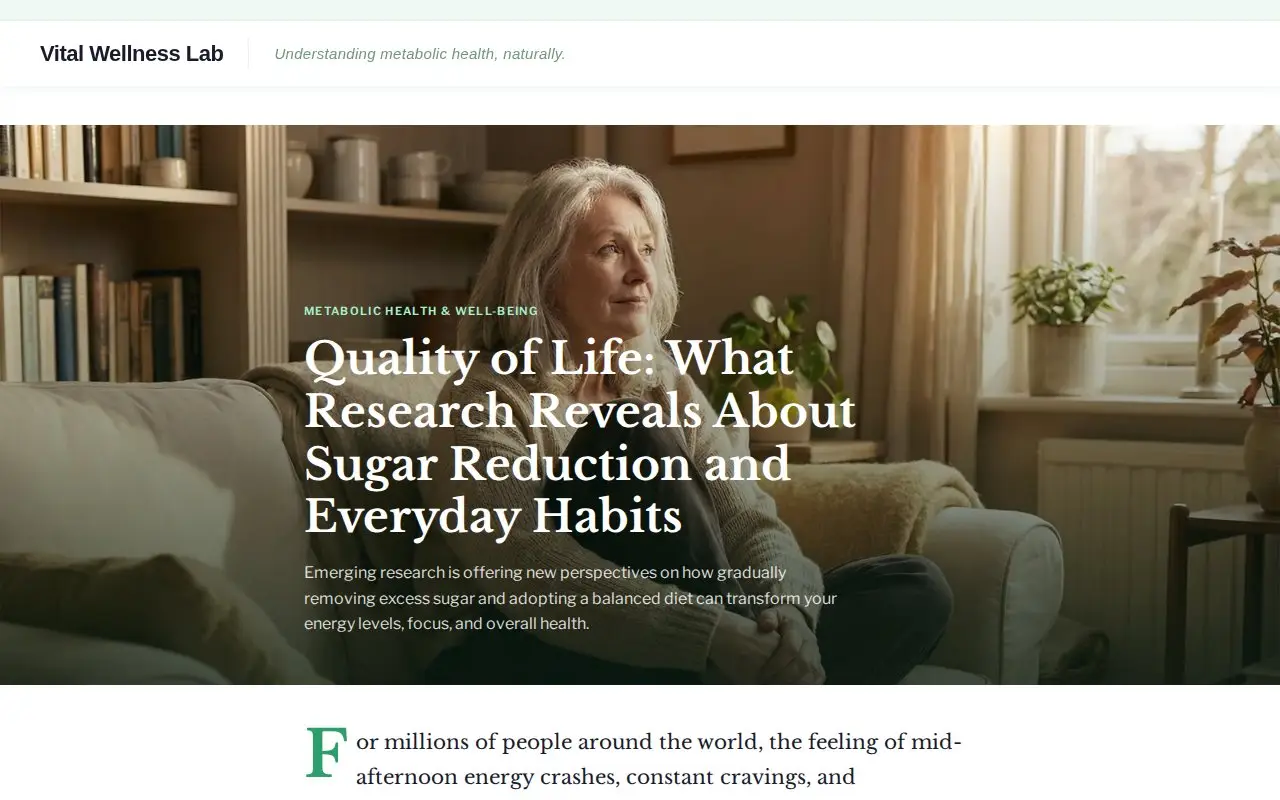
Quality of Life: What Research Reveals About Sugar Reduction and Everyday Habits
Vital Wellness Lab
Understanding metabolic health, naturally.
Metabolic Health & Well-Being
Quality of Life: What Research Reveals About Sugar Reduction and Everyday Habits
Emerging research is offering new perspectives on how gradually removing excess sugar and adopting a balanced diet can transform your energy levels, focus, and overall health.
For millions of people around the world, the feeling of mid-afternoon energy crashes, constant cravings, and unexplained fatigue are daily struggles that affect work, relationships, and quality of life. For a long time, these symptoms were simply dismissed as inevitable consequences of a busy lifestyle or getting older. But researchers are discovering that the story may point to a much more specific culprit.
"Many people believe that feeling sluggish is just part of modern life," reflects a perspective shared by metabolic health researchers. "But growing evidence suggests that our daily sugar intake, blood glucose spikes, and the resulting inflammatory environment play a much larger role in our vitality than we previously imagined."
This evolving perspective has opened new conversations about how we think about a balanced diet—and why safely and gradually removing excess sugar is one of the most impactful steps a person can take for their well-being.
Note: This article is for informational purposes only and does not constitute medical advice. Always consult a qualified healthcare professional regarding any health concerns or dietary changes.
74%
Of adults exceed
daily added sugar guidelines
50%
Drop in energy levels
following a severe glycemic crash
3x
Higher risk of fatigue
with high-sugar diets
Estimates based on data from national dietary guidelines and metabolic health publications. Individual experiences vary widely.
What Researchers Are Discovering About Sugar
Energy is not an isolated function—it depends on a complex balance of hormones, primarily insulin, which regulates how cells absorb glucose. When we consume excess sugar, this system is flooded. The body produces an overabundance of insulin to handle the spike, which often leads to a rapid drop in blood sugar shortly after. This dramatic fluctuation is what causes the notorious "sugar crash" and triggers even more cravings.
Illustration: The cycle of glycemic spikes and crashes versus stabilized metabolic energy
While occasional treats are normal, researchers have increasingly turned their attention to the chronic consumption of hidden sugars. When the body is constantly managing glycemic spikes, it can lead to insulin resistance, making it harder for cells to get the energy they need. This doesn't just affect physical energy; it significantly impacts mental clarity and mood stability.
"Some researchers now view chronic fatigue and sluggishness not solely as a lack of sleep, but as a condition deeply influenced by our metabolic response to modern, sugar-heavy diets."
Beyond energy levels, studies have examined the potential roles of excessive sugar in chronic inflammation and oxidative stress. This has led to a broader conversation about how gradually replacing refined carbohydrates with whole foods can complement conventional approaches to improving quality of life.
Common Habits That Sabotage Metabolic Health
If blood sugar and inflammatory factors play a huge role in how we feel every day, then certain everyday habits could potentially be holding you back. Experts have identified common behaviors that may be worth examining if you're looking to reduce sugar and reclaim your vitality.
Consuming "Hidden" Sugars
Sugar isn't just in desserts. It's often disguised in savory foods like salad dressings, pasta sauces, yogurt, and bread under names like high-fructose corn syrup, dextrose, or maltodextrin. Reading labels can reveal surprising sources of daily sugar intake.
Skipping Protein at Breakfast
Starting the day with a carbohydrate-heavy meal (like sweetened cereals or pastries) guarantees an immediate blood sugar spike. Incorporating protein and healthy fats first thing in the morning has been shown to stabilize blood glucose levels for the rest of the day.
Drinking Liquid Calories
Sodas, sweetened teas, and even fruit juices deliver concentrated sugar directly to your liver without the fiber needed to slow absorption. This causes some of the most severe insulin spikes and is a primary driver of metabolic stress.
Stress-Induced Snacking
Ongoing stress elevates cortisol, a hormone that naturally increases blood sugar and triggers cravings for "comfort" foods. Finding non-food related stress management techniques is a crucial step in breaking the emotional eating cycle.
Important: The habits described above are areas of ongoing lifestyle research. Dietary transitions should be done gradually. This information is not intended to diagnose or suggest treatment for any condition.
Foods That Support a Balanced, Low-Sugar Lifestyle
The secret to reducing sugar isn't starvation; it's substitution. By filling your diet with nutrient-dense foods that promote satiety and slow down digestion, cravings naturally begin to fade. Here are three categories that form the foundation of a blood-sugar-friendly diet.
Foods rich in fiber, protein, and healthy fats that help stabilize blood sugar and reduce cravings
Food Category #1
High-Quality Proteins
Eggs, lean poultry, fish, and legumes are essential. Protein takes longer to digest, providing a slow, steady stream of energy rather than a spike. It also triggers the release of satiety hormones, keeping you full and making sugar cravings much less frequent.
Food Category #2
Fiber-Rich Vegetables
Broccoli, leafy greens, asparagus, and cauliflower are excellent sources of dietary fiber. Fiber acts like a "net" in your digestive system, significantly slowing down the absorption of any carbohydrates you eat, which prevents sudden insulin spikes.
Food Category #3
Healthy Fats
Avocados, olive oil, nuts, and seeds are crucial for metabolic health. Fats have virtually zero impact on blood sugar levels. When combined with a moderate amount of complex carbohydrates, they provide long-lasting, stable energy for both the body and the brain.
Conversely, many health professionals suggest that gradually tapering off highly processed foods is more effective than "going cold turkey." Allowing your taste buds time to adapt to less sweet, natural flavors is a sustainable approach to long-term quality of life.
The Nutritional Connection: What Research Suggests About Cravings
Sometimes, sugar cravings are the body's way of asking for missing nutrients. Among the most frequently discussed nutritional factors in metabolic research are essential minerals like Magnesium and Chromium. Chromium, in particular, has been extensively studied for its role in macronutrient metabolism and its potential to support healthy insulin function.
Some studies have observed that individuals with certain mineral deficiencies are more likely to experience intense cravings. Other nutrients that have drawn research interest include Alpha-Lipoic Acid (ALA), a powerful antioxidant studied for its potential role in supporting cellular energy production and reducing oxidative stress caused by high-sugar diets.
"Many wellness professionals suggest that a comprehensive approach—combining mindful eating, gradual sugar reduction, and balanced micronutrition—is a reasonable foundation for stabilizing energy and overall well-being."
Simple Approaches to Support Your Transition
Beyond just changing what's on your plate, some individuals have reported exploring various lifestyle modifications as part of their strategy to overcome sugar dependence. While individual experiences vary, these approaches represent areas of ongoing success for many.
Lifestyle Focus Areas Being Explored
Hydration Before Snacking
The body often confuses thirst for a sugar craving. Drinking a large glass of water and w…
Text scraped from the landing page for research purposes. © respective owners. This text is sourced from the advertiser's public landing page; for removal, contact dmca@luba.media.