- First seen
- May 9
- Last seen
- May 11
- CTA
- Learn More
Keeping Cash At Home: Tips Brits Might Need to Know
Trustorafin@trustorafin
Seen in
Tech & routing
- Redirect chain
- 2 hops
- Language
- English
Landing page
Landing page intelligence
kino.trustorafin.com
Host
kino.trustorafin.com
Path
/click.php
Full URL
Redirect chain
2 hops- hop 1kino.trustorafin.com
- finaltrustorafin.com
Landing page snapshot
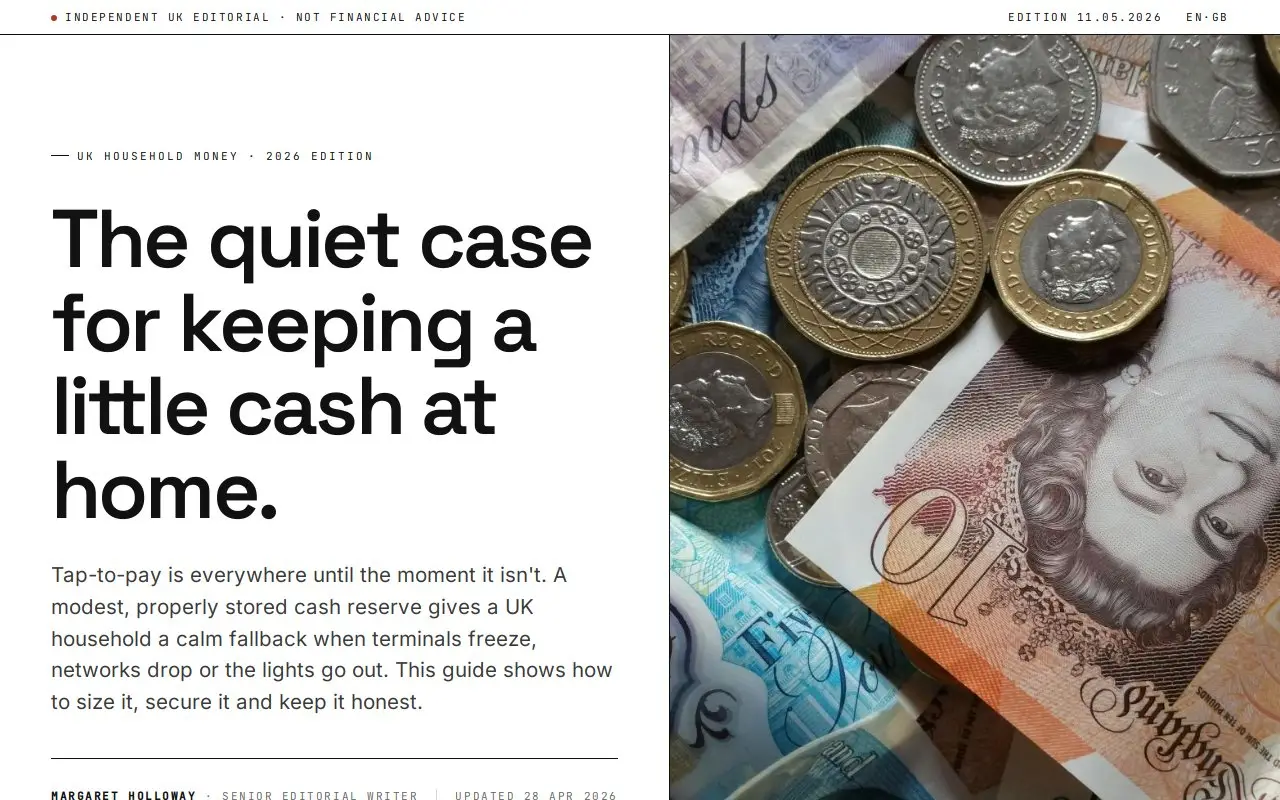
Captured 2026-05-14
Tracking parameters
- key
- u6zvarf8o0b8w7a1u933
- clid
- GiAPQK5CQq5jvihWIiQza5taysB9AO_GCYjXIVMabl3ETyDstVwoppn5zZiKlufhATCkiEI
- site_id
- 1082404
- campaign_name
- uk1-May-MOBT-07.05
- title
- Keeping+Cash+At+Home:+Tips+Brits+Might+Need+to+Know
- cpc
- oC-T5-mXZK05MTMfM_Usm1aTjSXYPwRYeOtxexBlrAw
- site
- ynet-ynetwebsite-mobile
- campaign_item_id
- 4269162932
- campaign_id
- 49253066
- site_domain
- ynet.co.il
- creative_name
- (empty)
- tblci
- GiAPQK5CQq5jvihWIiQza5taysB9AO_GCYjXIVMabl3ETyDstVwoppn5zZiKlufhATCkiEI
+ 6 known trackers hidden (cloaker IDs scrubbed at ingest).
Tracking setup · Taboola
Taboola passes site, site_id, campaign_id, campaign_item_id and click-id by default. Map those to your tracker's source/sub1-4 fields. Use {click_id} as your unique click identifier when posting back conversions.
?site={site}&site_id={site_id}&campaign_id={campaign_id}&campaign_item_id={campaign_item_id}&click-id={click_id}Default Taboola setup template: ?site={site}&site_id={site_id}&campaign_id={campaign_id}&campaign_item_id={campaign_item_id}&click-id={click_id}
Landing page text
Show landing page text
Visible text extracted from the advertiser's landing page · last fetched 2026-05-12
▶
Landing page text
Show landing page text
Visible text extracted from the advertiser's landing page · last fetched 2026-05-12
Cash at Home in the UK (2026): Sensible Limits, Safe Storage & Insurance Reality | TrustoraFin
Independent UK editorial not financial advice
Edition 12.05.2026
ENGB
UK Household Money 2026 Edition
The quiet case for keeping a little cash at home.
Tap-to-pay is everywhere until the moment it isn't. A modest, properly stored cash reserve gives a UK household a calm fallback when terminals freeze, networks drop or the lights go out. This guide shows how to size it, secure it and keep it honest.
Margaret Holloway Senior Editorial Writer
Updated 28 Apr 2026
9 min read
Editorial photograph
In this guide
Where the law actually stands
The case for a household float
Setting the right number
Securing it, not just hiding it
What your policy will really pay
Cash at home vs. money at the bank
A five-point readiness check
Reader questions, answered
Our editorial position
Almost every transaction in the UK now starts with a card or a phone, yet a surprising number of households still keep a small stash of notes somewhere quiet. It is rarely a vote of no-confidence in the banking system. It is usually about wanting a calm option when the everyday machinery of paying suddenly stops cooperating.
The real skill is restraint. A small, intentional reserve is reassuring. A large, undefined heap of money in a drawer does the opposite: it invites theft, slowly loses value to inflation, and quietly slips outside whatever your insurer is willing to cover.
The five things worth remembering
No UK statute prevents you from holding your own lawful money at home.
Home contents policies almost always treat cash as a separate, much smaller category.
The right reserve is anchored to a few weeks of essential outgoings, not a round number.
A certified, anchored safe will out-perform any clever hiding place you can imagine.
Anything beyond a short-term cushion belongs in a protected savings account, earning interest.
01 / Section Where the law actually stands
Holding your own lawful cash at home in the UK is entirely permitted. There is no statutory upper limit on a household balance and no obligation to declare ordinary domestic sums to any authority.
UK households face no statutory limit on personal cash held at home
The friction usually appears at the other end of the journey, when a sizeable amount of cash later returns to a bank account. UK anti-money-laundering rules require banks to question unusual or unexpected deposits. A short evidence trail (a payslip, a bill of sale, a withdrawal slip from years earlier) is generally all that is needed to settle those queries quickly.
02 / Section The case for a household float
Resilience when systems hiccup
Card networks and home broadband are reliable on average, but never perfect. A small float means you can still pay for fuel, groceries or a tradesperson the day a payment processor goes dark, without scrambling for a backup card or a working ATM.
A sharper eye on spending
Some families also use cash as a deliberate budgeting tool. Splitting next week's food allowance into envelopes makes overspending immediately visible, in a way a banking app, with its endless tap-and-forget transactions, almost never does.
Cash budgeting can sharpen everyday discipline when used in modest amounts
Quick start
Not sure where your household sits?
Grab the free one-page readiness checklist and find your right reserve in under five minutes.
Jump to the form
03 / Section Setting the right number
No single figure suits every home, but there is a sensible method. Estimate one to four weeks of essential outgoings (food, transport, fuel, the bills you cannot defer) and let that number cap what you keep on the premises.
For most UK households, the answer lands somewhere between 300 and 1,800 . Smaller households, city locations with plenty of payment options, and tighter budgets sit at the lower end. Larger families, rural areas, or homes caring for elderly relatives can usually justify a slightly bigger float.
Once a home reserve drifts well past a few weeks of essentials, two problems arrive at once: you carry more loss than your insurer will reimburse, and the money is steadily losing real value to inflation while it sits idle in a drawer.
Treat home cash like an emergency torch: useful, intentional, and never larger than the job it is there to do.
— TrustoraFin Editorial Team
04 / Section Securing it, not just hiding it
Hiding cash and securing cash are two very different exercises. A determined intruder rules out the obvious places within minutes. What slows them down is something physical: bolted down, awkward to remove, and time-consuming to break into.
A certified safe, fixed properly to floor or wall, is the single biggest improvement most households can make
Storage approach
Verdict
Why it matters
Certified safe, anchored to floor or wall
Recommended
Defeats opportunistic theft and is frequently a precondition for higher insurer cash limits.
Reserve divided across two discreet, secured spots
Sensible
Limits the impact of any single incident, provided both locations are properly secured rather than merely concealed.
Sock drawer, bedside cabinet, jewellery box
Avoid
The first three places a burglar will check, in roughly that order.
Freezer, biscuit tin, behind a picture frame
Avoid
The clever hiding spots are well known and quickly searched by anyone doing this professionally.
05 / Section What your policy will really pay
Almost every UK home contents policy ring-fences cash from the rest of your possessions. The standalone cash limit is often startlingly low (a few hundred pounds is typical), even when the broader contents cover runs into the tens of thousands.
Before you commit to a number, fish out your policy schedule and verify:
The exact cash limit, and whether the figure differs in the home versus out of it
Any storage conditions: some insurers only pay if the cash was held in a safe
What proof of loss is required after a theft, fire or flood claim
Whether the insurer expects to be notified if you regularly hold a larger float
Free editorial resource
Distil this guide into a one-page checklist.
Reserve sizing, safe standards and the precise insurance questions to ask, delivered straight to your inbox.
Get the checklist
06 / Section Cash at home vs. money at the bank
Both have a job to do. The question is not which one wins, but which one you are leaning on for which task.
Factor
Cash at home
Bank account
Spending during a local outage
Available immediately
Depends on networks staying up
Returns over time
No interest, real value erodes with inflation
Earns interest at competitive rates
Risk of physical loss
Theft, fire and water damage are all live risks
No in-home exposure
Statutory protection
None. You are effectively self-insured
FSCS protects up to 85,000 per institution
07 / Section A five-point readiness check
Read each statement and answer it honestly. Two or more no answers is a clear signal that the current setup needs tightening.
A quick household audit
I know, to within roughly 50, how much cash is in the house right now.
That figure is tied to a specific number of weeks of essential spending, not a guess.
It is kept somewhere proper: not a drawer, not the bedside cabinet, not the freezer.
I have read the cash clause in my contents policy at least once in the past 12 months.
If my bank asked tomorrow, I could explain in one sentence where the money came from.
Add a six-monthly reminder to your calendar to repeat the exercise. Home reserves drift upwards far more often than they drift down.
08 / Section Reader questions, answered
Is there any legal cap on how much cash I can keep at home?
+
No. UK law does not set a statutory household ceiling for legally held personal cash.
Can a home cash float take the place of an emergency fund?
+
Generally not. A small float covers short, immediate disruptions; a proper emergency fund in a savings account is what carries you through larger life shocks. They are designed to work side by side.
Will…
Text scraped from the landing page for research purposes. © respective owners. This text is sourced from the advertiser's public landing page; for removal, contact dmca@luba.media.